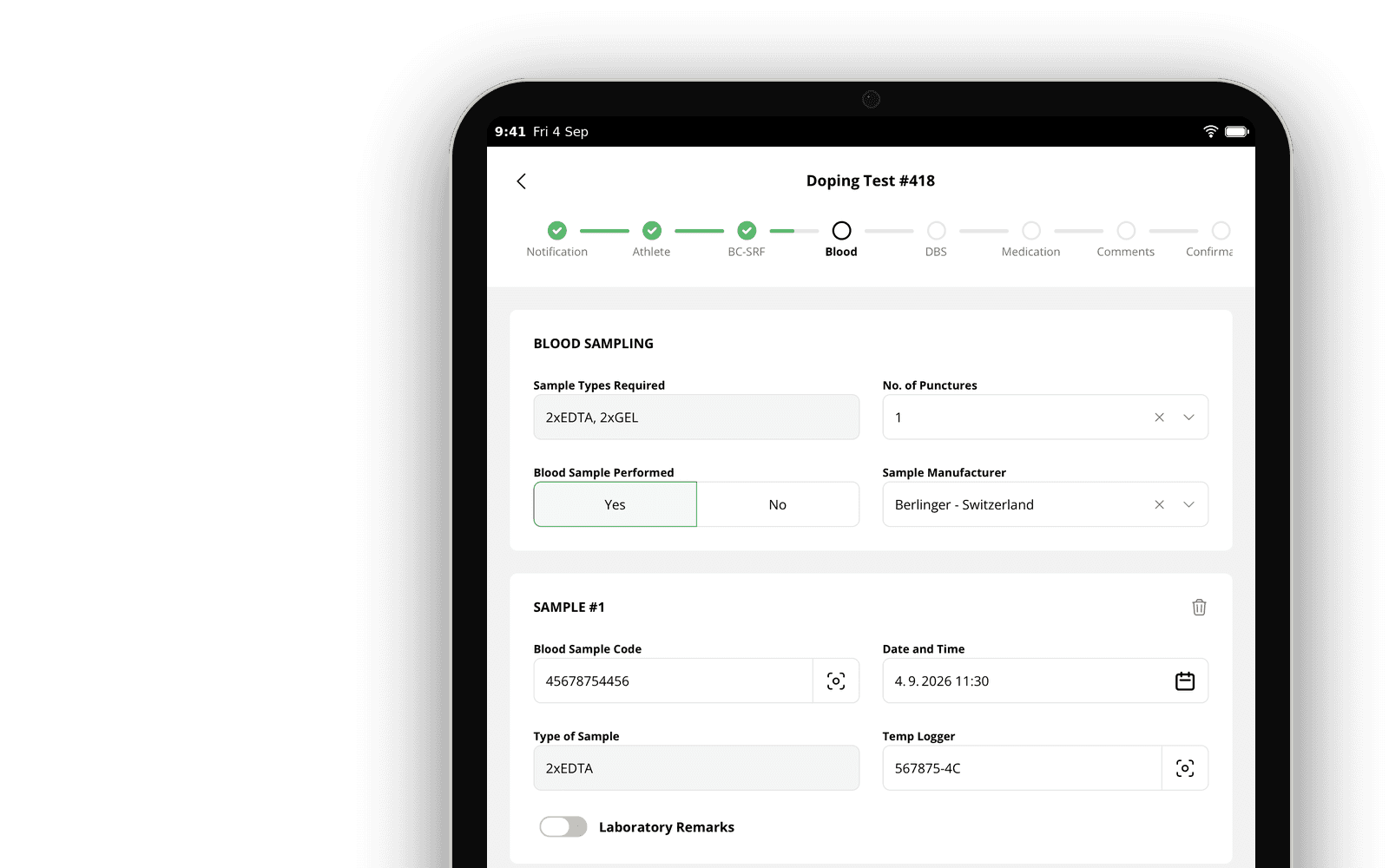
I take products from a client’s idea to production — as the CTO who designs the system and leads the team, and as the engineer who ships it.
20+ years building software, 15+ leading teams, the last ten on MODOC — the platform behind more than 30% of the world’s doping controls. Today AI agents work at every step, inside a harness of rules and gates I designed.

Andrej Janoga
Product engineer · CTO at CANNYPACK
“Most software doesn’t fail inside one discipline. It fails in the handoffs between them — and I’ve done every one of those jobs myself.”
Every stage of the SDLC, from the first requirement to production support.
Selected work
How I build
Follow one piece of work from a client’s idea to production. Agents work at every step. Every decision is still mine.
Step 01 of 06
Business requirements
What I do
I work with the client until we both know what done looks like, and what must never go wrong.
What agents do
Turn the raw material into a first draft, and flag the gaps and contradictions.
What comes out
A business requirements document (BRD) with acceptance criteria, signed by both sides
Step 02 of 06
Solution design
What I do
I choose the architecture, the data model and the security boundaries, set the rules and the gates (automated checks) the build will run under, and defend every decision — or change it.
What agents do
Research the options, map what already exists, draft the decision records, then argue against the design: edge cases, failure modes, cost, security.
What comes out
A solution design document (SDD) and its architecture decision records (ADRs)
Step 03 of 06
Implementation plan
What I do
I review it, push back where it’s wrong and approve it. Nothing changes in the code until I do.
What agents do
Draft the plan step by step, with options for every open decision.
What comes out
An approved implementation plan
Step 04 of 06
Build
What I do
With the team, I take the parts that need a human and keep the build on the plan.
What agents do
Write the code, and the tests against the acceptance criteria. Each agent loads the rules for the part of the system it touches.
What comes out
A pull request with tests
Step 05 of 06
Verify
What I do
I read what the gates can’t judge: architecture, data, auth, money. When something slips through, I fix the gate, not just the code.
What agents do
Review every change and fix what lint, types, tests and CI flag before a person looks at it. Agents can’t commit; people do.
What comes out
A change that passed every gate, and my review
Step 06 of 06
Release & run
What I do
I cut the release, tell the client what changed, and take the hard cases in production. What we learn there feeds the next requirement.
What agents do
Draft the release notes and help trace issues.
What comes out
A release, its notes, and someone who answers for it
Software that has to work far from a desk — on the road, on a service call, at the Olympic Games.
I started programming at 14 and have built software professionally since 2007: fleet telematics at MOVYS, parcel logistics at DPD Slovakia, where I led the IT department, and since 2016 MODOC at CANNYPACK. I started MODOC as a one-month proof of concept and built it, with the team I hired and led, into a multi-tenant SaaS used on every continent. I’ve been CTO since 2019.
In 2020 I re-platformed MODOC from PHP and Ionic to TypeScript, React, Node.js and AWS — the stack I work in today. That’s why my harness works: I know what the gates should catch because I’ve written the code they check. This year I moved my engineering team onto the same way of working, with a human approval stop before any change and agents that can’t commit.
I do my best work hands-on: remote, async, and judged on what ships. Alongside CANNYPACK I build my own products, and my company, The MiW, takes on a few client projects.
Bratislava, Slovakia · CETRemote-firstEnglish · Slovak · Czech
Experience across roles includes: